Solid waste · BANIQL BEST™
Recoverable
Solid residues designed for recovery as agricultural fertilizer and magnesium products rather than permanent tailings.

Technology · BEST™
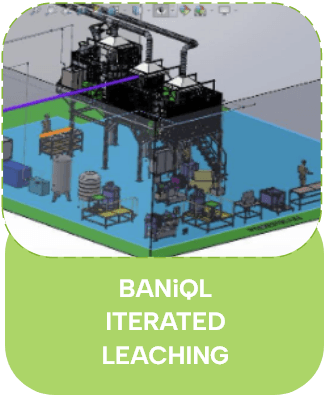
BEST™ extracts nickel selectively at atmospheric pressure, without autoclaves. An independent, non-HPAL route to Class 1 nickel, designed to recover its residues instead of storing toxic tailings.
The problem
Battery-grade nickel is concentrated, energy-intensive to produce, and dominated by heat- and pressure-heavy incumbents that leave toxic waste behind.
01
Indonesia supplies roughly 60% of the world's mined nickel, and refining is concentrated in even fewer hands, leaving the global battery supply chain dependent on a narrow set of sources for Class 1 nickel.
02
HPAL relies on high-temperature, high-pressure autoclaves: energy-hungry, capital-heavy, and operationally demanding to run safely.
03
Conventional routes generate large volumes of acidic tailings and toxic by-products that require costly long-term containment.
The product chain
01
Lateritic nickel ore under a long-term, non-binding supply MoU.
02
Mixed hydroxide precipitate: an intermediate battery feedstock concentrating nickel for refining.
03
Battery-grade nickel sulfate, the precursor input for cathode active material.
04
Refined nickel units flow into cathode and cell manufacturing, with Class 1 metal also serving aerospace and energy superalloys.
Process outcomes
Indicative, outcome-level comparison against atmospheric leaching and High Pressure Acid Leaching, driven by atmospheric operating conditions.
Energy intensity · indexed to HPAL = 100
BANIQL BEST™
25
Atmospheric leaching
70
HPAL
100
Carbon footprint · indexed to HPAL = 100
BANIQL BEST™
20
Atmospheric leaching
65
HPAL
100
Solid waste · BANIQL BEST™
Recoverable
Solid residues designed for recovery as agricultural fertilizer and magnesium products rather than permanent tailings.
Solid waste · Atmospheric leaching
High volume
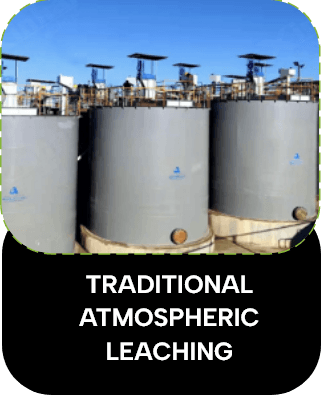
Large volumes of residue that must be neutralized to mitigate environmental damage.
Solid waste · HPAL
High volume
Large volumes of acidic tailings requiring long-term management.
~70–80% less energy · selective nickel leaching with iron rejection · 3× nickel concentration · atmospheric leach at up to 95 °C, ~1 bar
Recoverable by-products
The BEST™ process is designed to turn what conventional routes discard as hazardous waste into useful materials.
01
Solid residue recovered as ammonium sulfate (~21% N), targeted as a saleable agricultural fertilizer, currently in field trials growing corn.
02
Magnesium-bearing streams recovered as magnesium hydroxide, Mg(OH)₂. A targeted secondary revenue stream, at lab-prototype stage.
Proven, not theoretical
Class 1 nickel is projected to flip to structural deficit around 2028–2030 (Benchmark Minerals, Fastmarkets). BANIQL pairs a working process with a long-term ore-supply MoU and a product evaluated by potential customers.
01
Over 1,000 kg of battery-grade MHP produced and evaluated by potential customers in Korea, Japan, Taiwan, and the US.
02
TRL 6 process running in Indonesia since February 2025 at over 100 kg/day of ore, with long-term ore supply under a non-binding MoU.
03
A signed, non-binding offtake LOI with a Korean customer, estimated at US$16.5–21M, underpins demand for BANIQL nickel units.
Contact us
Get in touch to learn more about the Baniql Process, get samples, and discuss opportunities to be part of our journey.